


Bonus Buys in Crypto Slots: What a Feature Buy Really Costs
The bonus buy button lets you pay to trigger a slot's feature round instantly. Here is how it works, what it really costs, and why it never beats the house edge.

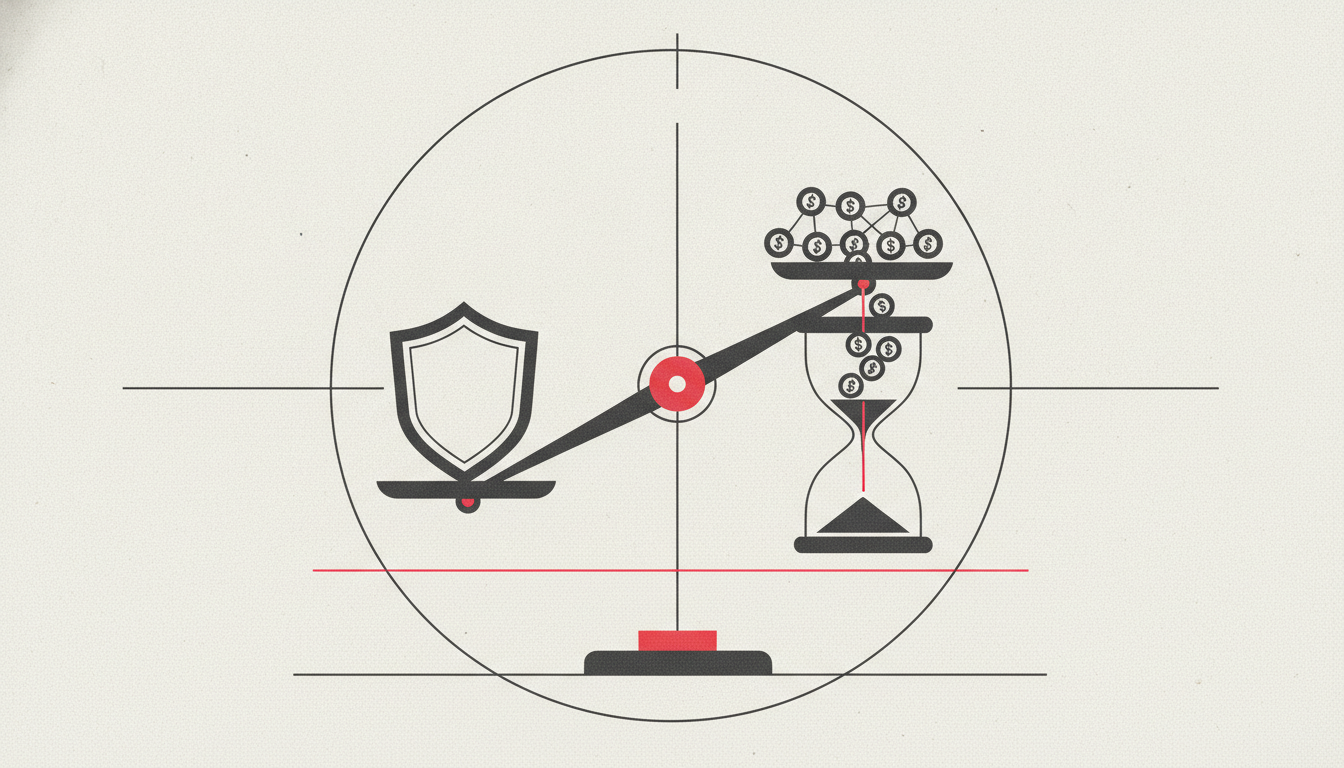
Many crypto slots now show a bonus buy (or feature buy) button that lets you pay a fixed price to jump straight into the free-spins round instead of waiting for it to trigger naturally. It looks like a shortcut to the exciting part, but it is one of the fastest ways to stake large sums, and it does nothing to change the maths in your favour. This article explains how the feature works, what the price really represents, and how to think about it honestly.
How a bonus buy actually works
On a normal spin, a slot’s bonus round triggers only when a certain combination of symbols lands, which happens relatively rarely. The bonus buy button removes that waiting game: you pay an upfront price and the game immediately awards you the feature, usually the free-spins round, as if it had triggered on its own. Everything after that plays out exactly as a naturally triggered feature would, using the same reels and the same random outcomes.
The price is typically expressed as a multiple of your stake. A feature might be priced at, for example, around 100 times your bet, though the exact multiple varies widely by game and by provider. So if your base stake is a small amount, one feature buy could cost the equivalent of a hundred ordinary spins in a single click. That is the first thing to internalise: a bonus buy is not one bet, it is many bets compressed into one moment.
Why buying the feature does not beat the house edge
It is tempting to assume that paying for a guaranteed bonus round is a way of skipping the “dead” spins and going straight to the profitable part. It is not. Slots are negative-expectation games by design: over the long run the game keeps a percentage of everything staked, and that margin is the house edge. The published RTP (return to player) is simply the flip side of that edge.
A bought feature has its own RTP built into its price. Providers set the buy cost so that, on average, what the feature pays back over many purchases is consistent with the game’s overall return, minus the house margin. Sometimes the RTP of a bought feature is slightly higher or slightly lower than base play, but in every case it remains below 100 percent. You are not buying an edge; you are buying a faster, higher-variance way to experience the same negative expectation. Because each buy stakes so much at once, the house edge is applied to a much larger amount of money in a much shorter time. If you want to understand how we describe game maths and returns, see our methodology.
Variance and bankroll: the real cost
The headline cost of a bonus buy is the price on the button, but the deeper cost is what it does to your variance and your bankroll. Feature buys are high-variance events: most will return less than you paid, while a small number may return several times the price. That distribution means long runs of losses are normal and expected, not a sign that something is wrong.
Consider a purely hypothetical example: if a feature costs 100 times your stake and you buy ten of them, you have staked the equivalent of a thousand base spins in a matter of minutes. At any realistic RTP, the mathematically expected outcome across those buys is a net loss, and the swings around that average can be severe. Standard bankroll discipline still applies, only faster: decide in advance what you are willing to lose, treat that amount as the price of entertainment, and stop when it is gone. A wagering calculator can help you see how quickly repeated buys burn through a balance and any attached bonus requirements.
Why some jurisdictions restrict bonus buys
Several regulators have moved to restrict or ban feature-buy mechanics, and the reasoning is consistent: buying a bonus lets a player stake far more, far faster, and can shorten the distance between casual play and harmful play. By collapsing a hundred spins into one decision, the button removes natural pauses and can make losses accumulate before a player registers what has happened. Availability therefore depends heavily on where a casino is licensed, and a mechanic offered in one market may be disabled in another. This is one of many reasons licensing and terms matter when choosing where to play; our casino reviews look at the rules each operator works under.
Key takeaways
- A bonus buy pays an upfront price, often a multiple of your stake such as roughly 100 times, to trigger the feature round instantly.
- Buying the feature does not beat the house edge; the buy has its own RTP baked into the price and it always stays below 100 percent.
- The real cost is speed: a single buy stakes the equivalent of many spins at once, so the house margin is applied faster.
- Feature buys are high-variance; most return less than they cost, and long losing runs are normal.
- Any worked figure is hypothetical, because exact prices, RTPs and outcomes vary by game and provider.
- Some jurisdictions restrict or ban bonus buys precisely because they accelerate spend, so availability depends on licensing.
Frequently asked questions
Does buying a bonus give better odds than spinning normally?
No. A bought feature has its own RTP set by the provider, and while it may differ slightly from base play, it stays below 100 percent. You are paying for instant access and higher variance, not for an improved edge. The house margin still applies to every buy.
How much does a feature buy usually cost?
The price is set as a multiple of your stake and varies widely by game and provider. As a hypothetical example, a feature might cost around 100 times your bet, meaning one buy stakes roughly what a hundred ordinary spins would. Always check the exact multiple shown in the game before buying.
Why do some casinos not offer bonus buys?
Because several regulators restrict or ban the mechanic on the grounds that it lets players stake more, faster, which can increase the risk of harm. Whether a casino offers feature buys depends on where it is licensed and the terms it operates under.
Bonus buys are entertainment, not a strategy, and no purchase changes the fact that slots are built for the house to win over time. If you play, treat any spend as the cost of fun, never as an investment. Gambling is for adults aged 18 and over only; if it stops being fun or you are worried about your play, please read our responsible gaming guidance and consider setting limits or taking a break.