


Crash Games Explained: Multipliers, Auto-Cashout and the House Edge
A plain, sceptical guide to how crash games work: rising multipliers, auto-cashout, provably fair verification, the built-in house edge and why no strategy beats it.

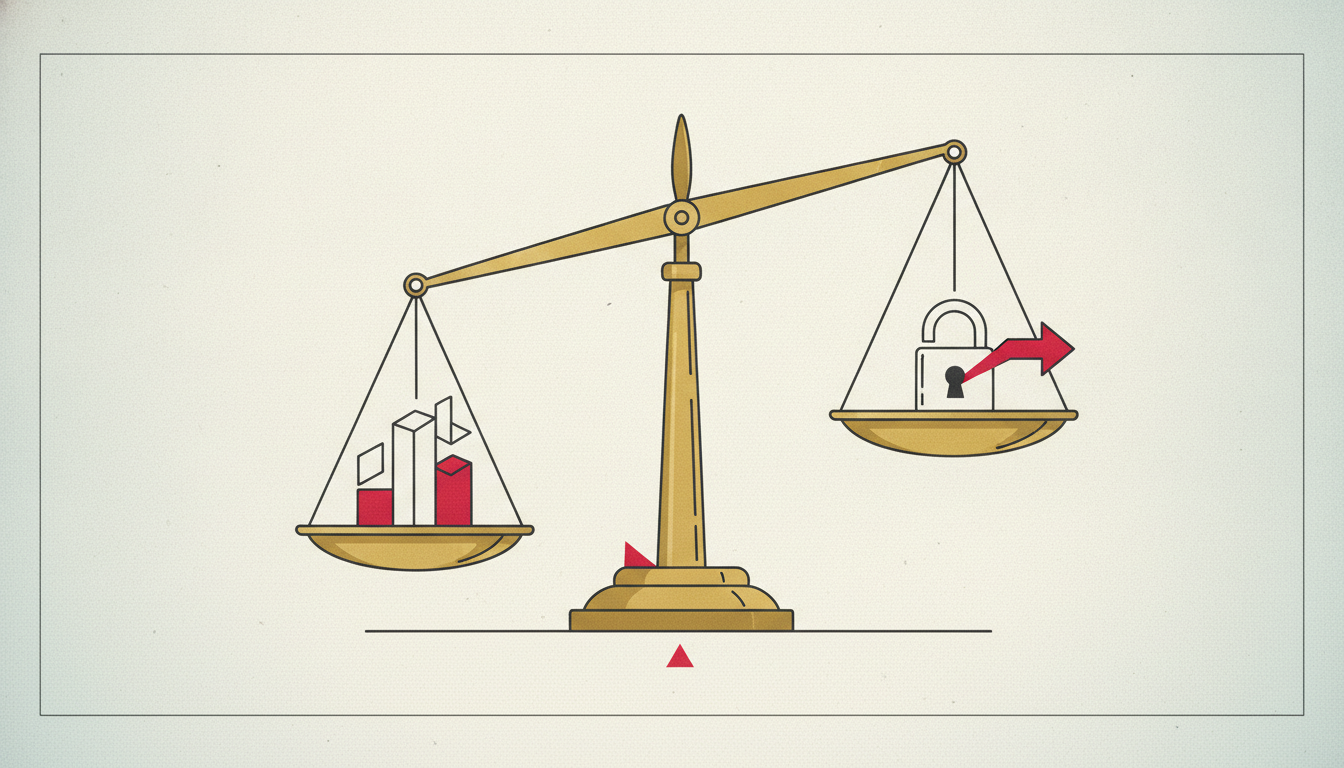
Crash games have become one of the most recognisable formats in the crypto-casino space, built around a single, tense idea: a multiplier climbs from 1.00× and can ‘bust’ at any instant, so you must cash out before it does. This guide from The Cashout Report explains the mechanics honestly — how the multiplier and auto-cashout work, how provably fair systems let you verify a round, where the house edge hides, and why no betting pattern beats it.
How a crash round actually works
A crash round is deliberately simple. You place a stake before it starts. When the round begins, a multiplier starts at 1.00× and rises — slowly at first, then faster — until, at some unpredictable point, it ‘busts’ and stops. If you pressed cash out before the bust, your stake is returned multiplied by the value shown at that moment; if you did not, you lose the stake.
The essential thing to understand is that the bust point for each round is decided when the round is generated, not by how long the curve happens to run on screen. The rising animation simply reveals a result that has, in effect, already been set. Cashing out at 2.00× doubles your stake; failing to cash out at all returns nothing.
Auto-cashout: automation, not an edge
Manual cashout depends on your reaction time, which is why most crash games offer auto-cashout: you set a target multiplier in advance, and the game cashes you out automatically the moment the curve reaches it, provided the round has not already busted. Set it to 1.50× and you are paid one and a half times your stake on any round that reaches at least that value.
Auto-cashout is a convenience feature, not an advantage. It removes the human lag of clicking, but it cannot change the underlying odds. A lower target (say 1.20×) wins more often but pays little each time; a higher target (say 10×) rarely lands but pays a lot when it does. Once you account for the house edge, every target setting carries the same negative expected value over the long run. Choosing where to auto-cashout changes the shape and volatility of your results, not whether the maths favours you.
Provably fair: verifying a round
Reputable crash games use a provably fair mechanism so a player can check, after the fact, that a round’s outcome was not altered once bets were placed. The general approach uses cryptography: before the round, the operator commits to a secret — typically by publishing a hash of a server seed — and the final bust point is derived from that seed combined with inputs such as a client seed. Because the hash is shown in advance, the operator cannot change the seed afterwards without the hash no longer matching.
After the round, the server seed is revealed. You can hash it yourself, confirm it matches the earlier commitment, then run the documented formula to check it produces the same bust multiplier you saw. If both checks pass, the result was fixed before you bet. But be clear about what this proves: provably fair verifies that a specific round was not tampered with. It does not remove the house edge — that edge is built into the very formula you are verifying. For more, see our methodology and our explainer on provably fair gaming.
Where the house edge lives — and why strategies fail
Every casino game returns, on average, less than it takes in, and crash is no exception. The house edge is commonly engineered in one of two ways. One is a small, explicit chance that the round busts instantly at 1.00×, so a fraction of rounds pay nothing regardless of your target. The other is a reduction applied across the payout curve, so a mathematically ‘fair’ multiplier is shaved down slightly before it is shown. Either way, the distribution of results is quietly tilted in the operator’s favour.
House edges on crash-style games are commonly in the low single-digit percentage range, though the exact figure varies by operator and should be checked in a game’s own rules rather than assumed. Whatever the precise number, it means the expected return on every bet is negative. This is why betting systems cannot rescue you. Under a martingale, for example, you double your stake after each loss to recover in one win — but a run of busts grows the required stake exponentially, and you hit your bankroll limit or a table maximum before variance turns. Such systems only rearrange when you win and lose; no sequence of bet sizes converts a negative expectation into a positive. You can see how wagering requirements interact with any bonus using our wagering calculator.
Key takeaways
- The bust point is set when a round is generated, so the rising curve reveals a predetermined result and cannot be predicted.
- Auto-cashout automates the exit at a target multiplier but does not improve your odds — it only shifts the balance between frequent small wins and rare big ones.
- Provably fair lets you verify a single round was not tampered with, but it does not remove the house edge, which is baked into the payout formula.
- The house edge is typically a low single-digit percentage, added via an instant-bust chance or a shaved payout curve, making every bet negative expected value.
- No betting strategy, including martingale, overcomes a negative expectation — systems only change variance, not the long-run average, so treat any stake as money you can afford to lose.
Frequently asked questions
Can I predict when a crash game will bust?
No. The bust multiplier is generated in advance to be unpredictable, and past results tell you nothing about the next round. A run of high multipliers makes the next round no more likely to bust early, and any tool or ‘signal’ claiming to predict the bust point is not credible.
Does auto-cashout give me a better chance of winning?
No. Auto-cashout simply exits at a multiplier you choose, without relying on your reflexes. It changes how wins and losses are distributed, but the expected value stays negative at every setting because of the house edge.
What does provably fair actually guarantee?
It lets you confirm that a round’s outcome was fixed before you bet and not altered afterwards, by checking a published hash against a revealed seed and re-running the result formula. It does not mean the game has no house edge or gives you an even chance — the edge is part of the formula you verify.
Responsible gaming: Crash games are entertainment with a built-in house edge, not a way to make money, and they are strictly for players aged 18+. Set a budget you can afford to lose, never chase losses, and take a break if play stops being fun. If gambling is causing you harm, please read our responsible gaming guidance for support options.