


Bitcoin Slots: RTP and Volatility Basics
RTP and volatility are the two numbers that describe a slot, and both are misread. What each means, why some titles ship in more than one RTP version, and why neither predicts your session.

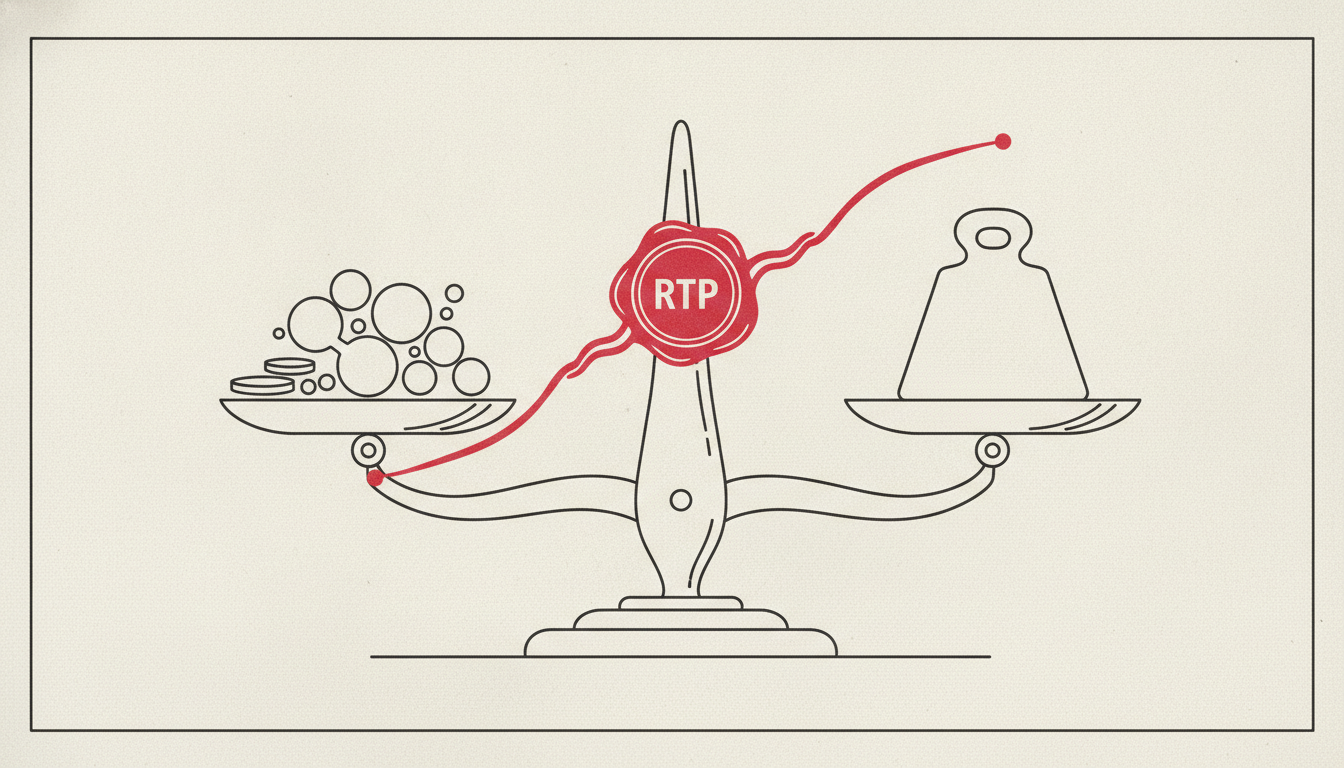
RTP and volatility are the two numbers that actually describe a slot – and both are widely misunderstood. Here is what they mean, what they do not, and why neither one predicts how your next session will go.
RTP is a long-run average
Return to Player, or RTP, is the share of all money wagered that a slot pays back over the very long run – millions of spins – expressed as a percentage. Most slots publish an RTP figure, commonly somewhere in the mid-90s, in the game’s information panel. The flip side of that number is the house edge: whatever RTP does not return is the mathematical margin the game keeps over time. The crucial word is “long”: RTP is a theoretical average across an enormous sample, not a promise about your session, your hour, or your next hundred spins.
A caveat on RTP versions
One thing worth knowing is that some slots ship in more than one RTP version, and an operator can choose to run a lower-RTP build of the very same title. The figure that governs your play is the one in the information panel of the game you are actually in – so check it there, rather than trusting a number quoted on a review or a provider’s promo page.
Volatility is about how the wins arrive
Volatility – sometimes called variance – describes the shape of the payouts rather than their long-run total. A high-volatility slot pays rarely but can pay big; a low-volatility slot pays smaller amounts more often. Two games with identical RTP can feel completely different: one grinds out frequent little wins, the other drains your balance for a long stretch and then, sometimes, delivers. Volatility is the reason “good RTP” and “good session” are not the same thing.
Providers and what they signal
Studios such as Pragmatic Play, Hacksaw Gaming and Nolimit City are known for particular styles – Hacksaw and Nolimit especially for high-volatility, feature-driven titles. Knowing a provider’s tendencies tells you what kind of ride to expect, but it does not change the underlying maths, and it is no substitute for checking the RTP and volatility of the specific game in front of you.
How RTP and volatility work together
RTP and volatility answer two different questions, and you need both. RTP tells you how much a slot returns on average over an enormous sample; volatility tells you how that return is distributed – as many small wins or a few large ones. A game can have a healthy RTP and still be brutal to play in the short term if its volatility is high, because the theoretical return is concentrated in rare outcomes most sessions never reach. Equally, a low-volatility slot with a slightly lower RTP can feel steadier because its return arrives in smaller, more frequent pieces. Neither number alone describes the experience. Read them together: RTP for the long-run margin, volatility for the shape of the ride you are signing up for.
Matching a slot to your bankroll
Volatility has a direct, practical link to how long your money lasts. High-volatility games tend to swing hard – long dry spells punctuated by occasional big hits – so they burn through a small balance faster and demand more patience and a larger cushion to see the features they are built around. Low-volatility games spread the return more evenly, so the same bankroll typically survives more spins, at the cost of the rare large payout. As a worked illustration rather than a prescription: if a session budget is modest and the aim is playing time, a lower-volatility title at a smaller stake will usually last longer than a high-volatility one at the same stake. Matching the game and the stake to the budget you have set is a bankroll decision, not a strategy for beating the house edge – which cannot be beaten over time.
Common misreadings to avoid
A few beliefs cause real damage. The first is treating RTP as a session promise – it is a long-run average across numbers of spins no individual will ever produce, so it says nothing about the next hour. The second is the idea that a slot is “due” after a losing streak; each spin is independent, and past results do not change the odds of the next one. The third is trusting an RTP quoted on a review or promo page over the figure in the game’s own information panel, which is the only one that governs your play. The fourth is reading a high RTP as low risk when volatility, not RTP, is what determines how bumpy the ride feels. Getting these straight will not change the maths, but it will keep your expectations honest.
Why RTP is not a session promise
Over a short session anything can happen – that is variance, and it cuts both ways. RTP only asserts itself over numbers of spins no individual player will ever produce. Treat published RTP as context, not a plan, set a budget that assumes the house edge is real, and lean on our responsible-gaming resources if the maths stops mattering to how you play.
Key takeaways
- RTP is a long-run average across millions of spins, not a promise about your session.
- The house edge is simply whatever RTP does not return over time.
- Volatility describes how wins arrive – rare and large, or frequent and small – not the long-run total.
- Two slots with identical RTP can feel completely different because of volatility.
- Some titles ship in multiple RTP versions, so trust the game’s own information panel, not a quoted figure.
- Match volatility and stake to your budget, and never expect RTP to rescue a short session.
Frequently asked questions
Does a high RTP mean I am likely to win?
No. RTP is a theoretical average across millions of spins, not a forecast for your session. A high-RTP slot still keeps a house edge over time, and short-run results are governed by volatility and chance. Treat RTP as long-run context, not a prediction about the next hour.
Is a slot ever “due” for a payout?
No. Each spin is independent, so a losing streak does not make a win more likely on the next spin. The idea that a game is “due” misreads how the underlying maths works. Past results have no effect on future odds, however long the dry spell has been.
Where should I check a slot’s RTP?
In the information panel of the specific game you are playing. Some titles ship in more than one RTP version, and an operator can run a lower-RTP build of the same slot, so a figure quoted on a review or promo page may not match. The in-game panel is the only one that governs your play.
Sources & further reading
See how games and providers factor into The Cashout Report methodology, and compare operators and their libraries across our reviews index, including our 7Bit review.