
The digital currency landscape in India is evolving rapidly, gaining momentum among both professional traders and everyday investors. One cryptocurrency capturing particular attention is XRP, Ripple’s native token, prized for its swift cross-border capabilities and strategic partnerships. As Indian regulatory attitudes warm and infrastructure matures, tracking the live XRP / INR exchange rate has become essential for those aiming to optimize trades or hedge against volatility.
Understanding XRP and Its Unique Market Position
XRP stands apart from many cryptocurrencies due to its primary mission: facilitating instant and low-cost international money transfers. Developed by Ripple Labs, XRP doesn’t compete with Bitcoin or Ethereum as a direct store of value or smart contract platform. Instead, its focus is on improving the efficiency of legacy banking rails.
Ripple’s Global Network and Indian Context
Ripple Labs collaborates with financial institutions worldwide—banks and payment providers use RippleNet’s technology to send value across borders. With India being one of the largest corridors for remittances globally, several Indian fintech firms and banks are experimenting with XRP-powered solutions. While absolute adoption rates vary, there’s clear momentum for integrating blockchain into the existing INR remittance network.
“A distinguishing feature of XRP is its ability to settle cross-border payments in seconds, a crucial advantage for markets like India where international remittance volumes are substantial. This speed, coupled with low transaction costs, positions XRP as a strategic tool for banking and fintech innovation.”
— Senior Blockchain Analyst, Global FinTech Review
Regulatory Attitudes and Impact on XRP / INR
India’s regulatory landscape surrounding cryptocurrencies has shifted notably in recent years. After periods of uncertainty, the Reserve Bank of India and related authorities now adopt a more measured approach, focusing on taxation and anti-money laundering. While outright bans seem less probable, all trades—including those involving XRP—face regulatory scrutiny and reporting mandates. This legal clarity, though imperfect, encourages transparency and has bolstered trading volumes at major Indian crypto exchanges.
How to Monitor Live XRP / INR Prices: Tools and Techniques
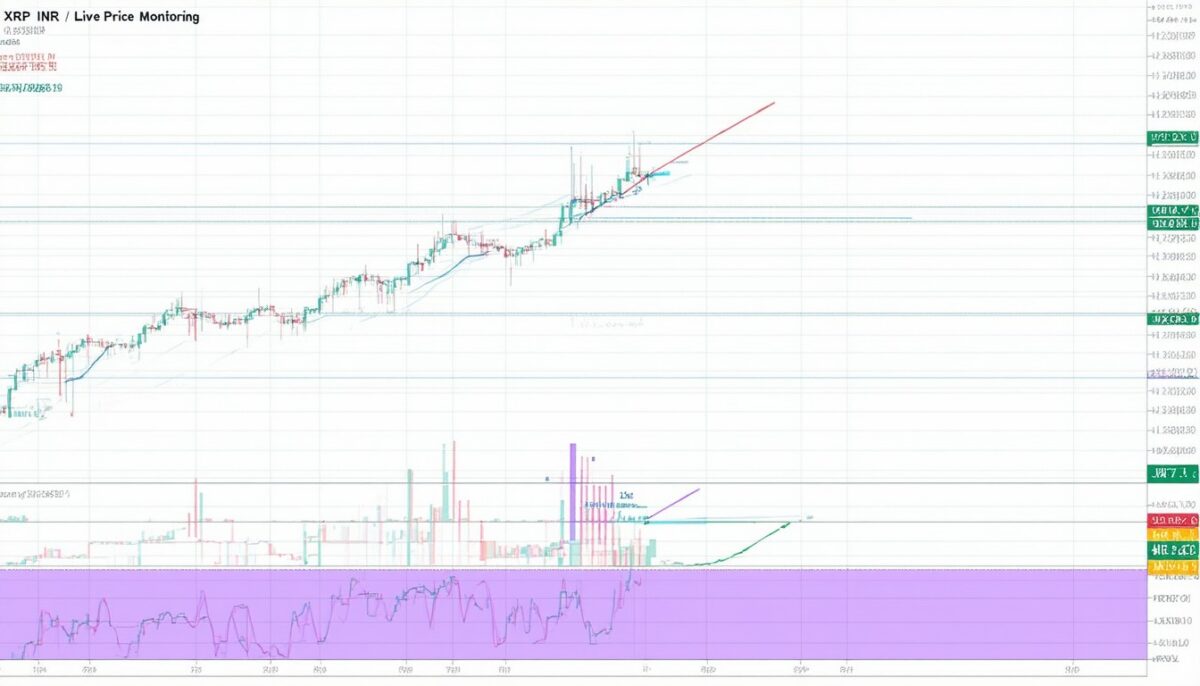
Staying updated on real-time XRP / INR rates is crucial for effective portfolio management and timely trading decisions.
Essential Data Sources
- Crypto Exchanges: Platforms like WazirX, CoinDCX, and Bitbns provide live XRP/INR prices, interactive candlestick charts, and order book depth.
- Aggregator Sites: CoinMarketCap and CoinGecko compile prices across top Indian exchanges, presenting volume-weighted averages and price histories.
- Market Widgets: Many financial news sites integrate live chart dashboards, simplifying regular monitoring.
Real-time data transparency empowers users to execute arbitrage, track technical indicators, or simply keep tabs on market sentiment as it develops.
Key Chart Patterns and Technical Signals
Most Indian investors utilize standard technical analysis tools to interpret XRP / INR price movements:
- Moving Averages (MA): Smoothing out short-term volatility, MA aids in identifying directional trends.
- Relative Strength Index (RSI): Overbought or oversold levels signal potential market reversals.
- Volume Analysis: Examining spikes or lulls in traded volume helps traders gauge the conviction behind price changes.
- Support and Resistance Lines: Marking historical highs/lows to predict future price boundaries.
In the Indian context, sudden regulatory leaks, exchange infrastructure changes, or corporate partnerships may cause sharp, event-driven swings—reminding traders to complement technical analysis with timely news-tracking.
Factors Influencing the XRP / INR Exchange Rate
The value of XRP in Indian rupees doesn’t exist in a vacuum. Several layered factors contribute to volatility and directional trends.
Global Catalysts
- Ripple Lawsuits and Ecosystem Developments: Legal decisions in foreign courts, particularly concerning the SEC in the United States, tend to ripple through (pun intended) global XRP pricing and liquidity.
- Macro Sentiment: As fiat currencies fluctuate against the US dollar, cryptocurrencies—including XRP—often act as alternate investment vehicles. Shifts in global monetary policy can push more attention toward digitally native assets.
Domestic Influences
- Rupee Strength: INR’s relative stability against global currencies affects the local price of XRP. A weakening rupee generally lifts XRP / INR rates, even if the underlying USD price is flat.
- Local Demand and Liquidity: Investor appetite on Indian exchanges—shaped by trends, celebrity endorsements, or viral news—can introduce temporary dislocations between domestic and international rates.
Exchange Access and Liquidity
Not all Indian trading platforms offer deep XRP liquidity or the same fee structures. Occasionally, premium or discount pricing appears on one exchange over another, creating fleeting arbitrage windows.
Comparing XRP / INR to Other Popular Trading Pairs
Indian investors don’t limit themselves to XRP, so understanding XRP / INR’s behavior relative to other pairs offers useful context.
XRP / INR vs. XRP / USDT
- Liquidity and Spread: USD Tether (USDT) pairs may offer tighter spreads, but INR pairs avoid fiat conversion hassles.
- Regulatory Simplicity: Trading directly in INR reduces the need to interface with stablecoins or foreign exchanges, a plus from both convenience and compliance perspectives.
XRP’s Performance Against Major Cryptos
While Bitcoin and Ethereum dominate market cap charts, XRP often outpaces them during periods of remittance-focused news or regulatory breakthroughs. However, these surges often retrace swiftly, emphasizing the need for active risk management.
Real-World Scenarios: Using XRP for Remittances in India
Consider a scenario: an Indian freelance professional completing overseas projects wants to minimize fees on incoming US payments. Certain payment processors now offer XRP-powered rails, converting USD to XRP and then to INR almost instantly. Compared to traditional wire transfers, the savings in both time and currency conversion charges can be significant.
On the flip side, small business owners exporting goods sometimes face challenges converting received XRP to INR at a desirable rate, especially during off-peak liquidity hours. Such challenges highlight the importance of exchange selection and timing trades to market conditions.
Charting Recent Trends: XRP / INR Price Movements
Over the past several years, XRP / INR has mirrored the larger crypto market’s cyclical swings but with its own spicy, event-driven spikes. Price responded acutely during milestones like major Ripple partnerships, SEC lawsuit announcements, and India’s updated taxation rules.
Periods of double-digit weekly gains have been observed following positive legal and partnership news, while regulatory uncertainty sometimes sparks steep corrections. Still, compared to altcoins with limited use cases, XRP’s direct integration with payment rails gives it underlying demand resilience during broader market dips.
Strategic Considerations for Indian XRP Investors
Diversifying across exchanges, setting up price alerts, and maintaining awareness of both local and international regulatory shifts are essential steps for anyone active in the XRP / INR market. Experts advise caution when leveraging positions, given liquidity and price gapping risk.
For those using XRP primarily as a remittance bridge, partnering with regulated, reputable platforms minimizes risk and transaction friction. Meanwhile, swing traders should prioritize exchanges with deep order books to avoid slippage, especially when executing large buy or sell orders.
Conclusion: Navigating the Dynamic XRP / INR Ecosystem
Tracking the live XRP / INR rate is more than a technical exercise—it links global crypto innovation with everyday financial realities in India. Rapid regulatory changes, evolving fintech partnerships, and an informed investor community have propelled XRP’s visibility in the Indian market. With practical utility in remittances and active trading, XRP’s INR pairing serves as a bellwether for digital asset adoption in the country.
Active participants should remain vigilant, leveraging a combination of technical and fundamental analysis while staying responsive to legal developments. For those with cross-border needs or a keen appetite for market action, XRP / INR offers both opportunity and ongoing lessons in digital finance.
FAQs
What is XRP, and why is it popular in India?
XRP is a digital asset developed by Ripple Labs, designed to facilitate fast and affordable cross-border payments. Its popularity in India stems from the country’s large remittance market, where efficient payment solutions are highly valued.
How can I track real-time XRP / INR prices and trends?
Indian crypto exchanges like WazirX and CoinDCX, as well as aggregator sites such as CoinMarketCap, provide live XRP / INR price charts and trading data. Most platforms also feature technical analysis tools for charting trends.
What factors impact the XRP / INR exchange rate the most?
Key drivers include global XRP news (such as Ripple partnerships or legal outcomes), the rupee’s strength relative to major currencies, and trading volumes on Indian exchanges. Regulatory updates in India also play a significant role.
Are there risks specific to trading XRP in India?
Yes, market volatility, liquidity differences among exchanges, and ongoing regulatory scrutiny are significant risks. Using reliable, compliant exchanges and staying informed of policy changes can help mitigate these risks.
Can I use XRP to send or receive international payments directly?
Some remittance services and payment processors support XRP-powered transfers, but it’s important to verify the service’s credibility and ensure competitive conversion rates to INR.
How does XRP / INR compare to Bitcoin or Ethereum trading in India?
While Bitcoin and Ethereum lead in volume and attention, XRP offers unique advantages for rapid transactions and remittances. However, its price often reacts sharply to legal and partnership announcements, making active risk management essential.