
The rapid growth of cryptocurrency adoption in India has ushered in new dynamics for both investors and industry observers. As digital assets continue to gain traction, tokens like Polkadot (DOT) have emerged as noteworthy alternatives to more established coins such as Bitcoin and Ethereum. For Indian investors, tracking the Polkadot price in INR has become critical for making informed trading decisions and understanding broader market trends. Given the volatile, yet often promising, nature of DOT’s performance, this article delves into Polkadot’s live price in INR, factors influencing its valuation, and technical analysis with locally relevant context.
What is Polkadot? A Brief Overview
The Polkadot Network and Its Vision
Polkadot is a next-generation blockchain protocol launched by the Web3 Foundation. Designed to enable cross-chain compatibility, Polkadot connects multiple blockchains into one unified network, facilitating seamless transfer of data and digital assets. Unlike single-chain networks, Polkadot uses a unique architecture—parachains and the central relay chain—to promote scalability, high throughput, and robust security.
Driving Innovation Across DeFi and Web3
By creating interoperability between different blockchains, Polkadot empowers developers to build decentralized applications (dApps) with enhanced features. Over the past few years, dozens of DeFi protocols, NFTs, and privacy-focused solutions have launched on the ecosystem, adding to Polkadot’s real-world utility.
“Polkadot’s ability to bridge numerous blockchains makes it uniquely positioned for the future of interoperable decentralized finance,” explains Arjun Madan, a Mumbai-based blockchain analyst.
Live Polkadot Price in INR: How It’s Determined
INR Valuation: Factors and Fluctuations
For Indian investors, understanding the DOT to INR value involves tracking global cryptocurrency market dynamics alongside local currency fluctuations. The DOT/INR price is influenced by:
- Global DOT/USDT and DOT/BTC trading pairs: Since most major crypto exchanges use USD or USDT as the base currency, shifts here are quickly reflected in INR valuations.
- Rupee exchange rates: Indiacentric pricing sees additional volatility due to USD-INR moves, making domestic prices more dynamic than global averages.
- Local supply-demand trends: Sudden surges in Indian buying or selling directly affect prices, sometimes producing a premium (“India premium”) over global rates due to high domestic demand.
Live Price Tools and Historical Charts
Most Indian crypto exchanges, including WazirX, CoinDCX, and ZebPay, offer real-time DOT/INR pricing through their web and mobile apps. Live charts help users monitor trends, compare historical highs and lows, and deploy technical indicators such as moving averages for deeper insights.
Technical Analysis: Assessing DOT’s Price Trajectory in INR
Key Support and Resistance Levels
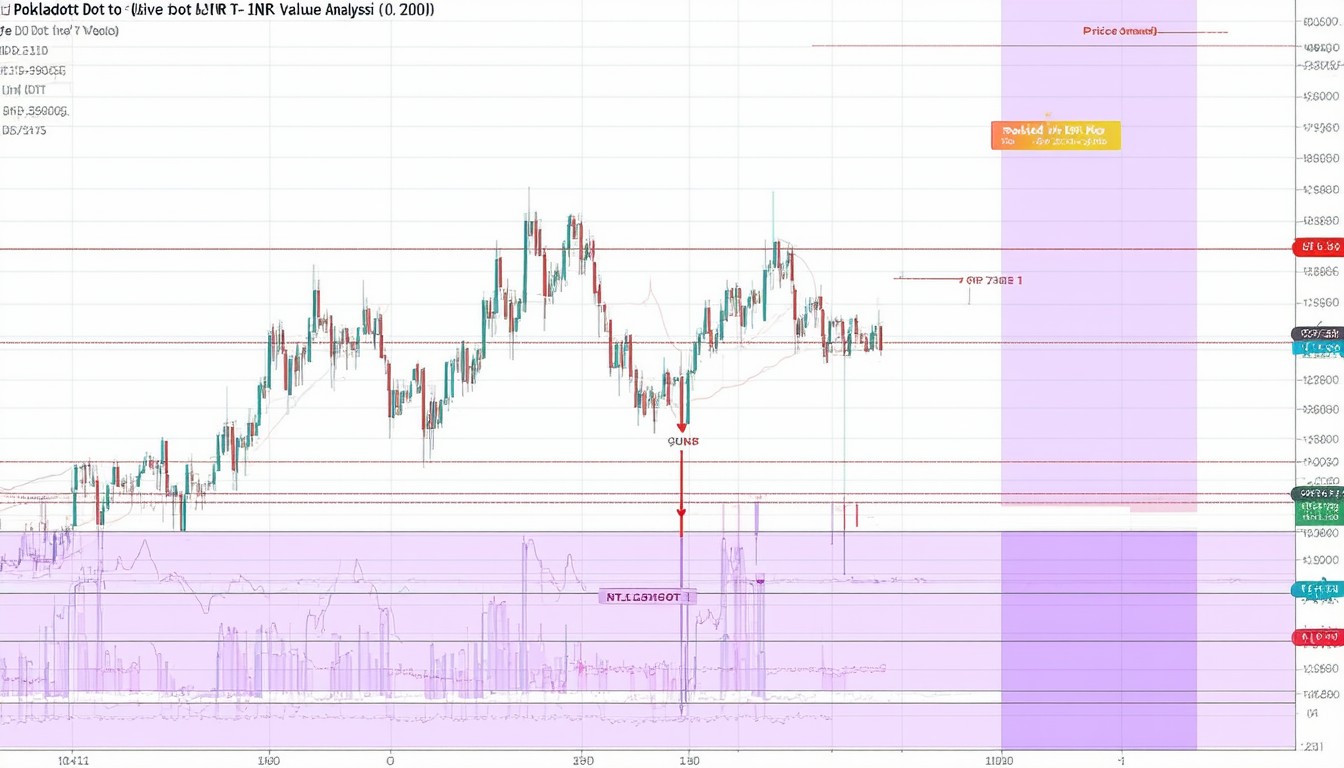
Technical analysis remains a favored strategy among both retail and advanced investors in India. By identifying support and resistance levels based on previous price movements, traders look to determine optimal entry and exit points.
- Support Levels: Historically, major buying interest for DOT in INR has emerged near psychologically rounded values and previous monthly lows.
- Resistance Levels: Price ceilings typically occur around previous highs or at technical barriers highlighted by charting tools like Fibonacci retracement.
Common Technical Indicators Used
- Relative Strength Index (RSI): Indicates whether DOT is overbought or oversold in the INR market.
- Moving Averages (MA): The 50-day and 200-day MA are commonly used to identify longer-term trends.
- MACD (Moving Average Convergence Divergence): Useful for spotting potential reversals in trending markets.
On many occasions during bull runs, DOT has shown strong positive momentum, with Indian exchanges experiencing higher trading volumes during such periods. During downturns, accentuated sell-offs—amplified by panic in rupee terms—can drive sharper corrections compared to global USD markets.
Historical Performance: Trends and Volatility
Polkadot’s Growth Since Listing
Since its launch, Polkadot has grown from an experimental protocol to a prominent blockchain fueled by strong developer activity. Its price journey in INR has mirrored global cycles but with local peculiarities:
- 2021 Bull Market: During the broader market rally, DOT’s INR value surged, reflecting both USD gains and a weakening rupee.
- Bear Phase: Corrections in 2022–2023 led to significant markdowns, with Indian portfolios facing dual risks of crypto price dips and rupee depreciation.
Volatility and Liquidity in the Indian Market
Compared to major cryptocurrencies, DOT’s liquidity in INR can be somewhat narrower, particularly outside of peak trading periods. This can result in sharper price swings on Indian exchanges. To manage such volatility, many Indian traders use limit orders, hedging strategies, or dollar-cost averaging to spread out their entry points.
Factors Influencing Polkadot Price in INR
Global Market Catalysts
Broader crypto market trends, regulatory announcements globally, partnerships, and on-chain network activity play key roles. For example, Polkadot’s incorporation of parachain auctions has sparked network upgrades and periodic surges in trading activity.
India-Specific Influences
- Regulatory Clarity: Speculation about crypto legislation in India often drives abrupt price movements and changes in market sentiment.
- Taxation: The implementation of new tax rules—1% TDS on crypto transactions and a 30% tax on profits—has re-shaped investing behavior, affecting demand and liquidity.
-
Banking Access: Changes in support from Indian banks or payment processors for crypto exchanges affect cash inflows and outflows, thereby impacting DOT/INR liquidity.
-
Local awareness and adoption: As more Indian institutions and retail investors enter the space through educational campaigns, demand for assets like DOT continues to rise, creating both upside and occasional volatility.
How to Buy, Trade, and Store Polkadot in India
Top Indian Exchanges Supporting DOT
Most mainstream platforms provide DOT/INR pairs with features like spot trading, instant buy/sell, and peer-to-peer (P2P) marketplaces. Popular choices include:
- WazirX
- CoinDCX
- ZebPay
- Bitbns
Security and Storage Tips
With Indian regulations still evolving, security is paramount. Investors are advised to:
- Use exchange platforms that implement rigorous KYC and wallet security standards.
- Transfer holdings to reputable private wallets (hardware wallets or trusted apps) for long-term storage.
- Regularly monitor updates from the Web3 Foundation and local authorities for changing compliance norms.
Real-World Example: DOT Adoption and Indian Use Cases
Beyond trading, the Polkadot ecosystem finds growing engagement among Indian developers and blockchain startups. Web3 ventures building on Polkadot’s substrate framework have emerged from cities like Bengaluru and Hyderabad, focusing on solutions for DeFi, supply chain, and decentralized identity.
Some Indian crypto users have utilized Polkadot’s staking features to earn passive income, capitalizing on protocol-level rewards denominated both in DOT and occasionally converted to INR as part of their portfolio diversification strategies.
Conclusion: Navigating DOT Price Swings in INR
For Indian investors, tracking Polkadot’s price in INR is more than a matter of real-time curiosity—it’s an exercise in managing risks and identifying emerging opportunities in a rapidly shifting financial environment. As DOT evolves, its value in the Indian context will continue to be shaped by both international crypto trends and local economic factors. Pragmatic trading, diligent technical analysis, and attention to evolving regulations remain critical for success in this vibrant market.
FAQs
How is the DOT to INR price calculated?
The DOT/INR price is primarily derived by converting the global DOT/USD price into Indian Rupees, factoring in the prevailing USD/INR exchange rate and liquidity on local crypto exchanges.
Where can I check live Polkadot prices in INR?
You can monitor real-time DOT/INR prices on leading Indian exchanges such as WazirX, CoinDCX, and ZebPay, all of which offer live charts and detailed trading statistics.
What drives the volatility of Polkadot’s INR price?
Polkadot’s INR value is influenced by global crypto market trends, local rupee exchange rates, regulatory news in India, and domestic supply-demand dynamics, leading to frequent price fluctuations.
Is DOT a good investment for Indian traders?
As with any cryptocurrency, DOT carries risks and potential rewards. It can be a valuable addition to a diversified portfolio, but investors should research thoroughly and be mindful of India’s regulatory framework.
How can I securely store DOT purchased in India?
For maximum security, it’s recommended to transfer DOT from exchange wallets to private wallets, such as hardware or highly-rated mobile wallets, especially for long-term holding.
Are there any taxes on Polkadot trading in India?
Yes, trading cryptocurrencies like DOT in India currently attracts a 30% tax on profits and a 1% TDS on transactions, as per guidelines issued by Indian tax authorities.